The Ultimate Guide to Skim Coating Drywall: How to Get a Level 5 Finish Like a Pro

Skim coating is the great equalizer in drywall finishing. It’s the difference between a wall that looks “fine” and a wall that looks like glass. Whether you are trying to cover up ugly 1980s texture, smoothing out a wall after wallpaper removal, or just want that high-end Level 5 finish, skim coating is the skill you need to master.

In this guide, we are going completely “open book.” I’m combining years of field experience, tool testing (including the truth about skimming blades vs. taping knives), and material science to give you the only resource you will ever need on skimming.

Table of Contents

My Go-To Skim Coating Setup

Part 1: Do You Really Need to Skim Coat?

Part 2: The Compounds and Tools

Part 3: How to Skim Coat Drywall Like a Pro (8 Steps)

Part 4: Advanced Troubleshooting & FAQ

Final Thoughts

My Go-To Skim Coating Setup

Tool/MaterialMy Top PickWhy I Use ItCheck Price
Best Skimming BladeLevel5 24″ Skimming BladeThe perfect balance of flex and control.[Check Price on Amazon]
Best Joint CompoundUSG Sheetrock Plus 3 (Lightweight)Sands like butter, low shrinkage.[Check Price on Amazon]
Best RollerLevel5 Compound Roller
(If budget is tight, get similar results with a 3/4″ paint roller)
Holds the most mud for faster application.[Check Price on Amazon]
Essential PrimerZinsser GardzSeals torn paper (brown side) for repairs or going over wallpaper.[Check Price on Amazon]

Part 1: Do You Really Need to Skim Coat? (The Strategy)

Before you mix a single bucket of mud, let’s break down if skimming is actually the right move. I see a lot of DIYers and even new pros jumping into skimming when they don’t need to, or skipping it when they absolutely should.

You SHOULD Skim Coat If:

  • You are covering texture: Orange peel, knockdown, or popcorn ceilings (after scraping) need a skim coat to become flat.
  • You damaged a lot of the drywall paper: If you tore the face paper removing wallpaper, you need to seal and skim. Painting directly over torn paper will bubble.
  • You want a Level 5 Finish: This is the highest level of drywall finish, where the entire surface is covered in a thin layer of mud to equalize the texture between the paper and the joints. This is critical if you plan to use high-gloss paint or have harsh lighting (glancing light) on the wall.
  • Old Plaster/Walls: Resurfacing old, wavy walls to look new again.

You Might NOT Need to Skim Coat If:

  • The damage is localized: If you just have a few nail holes or a single crack, spot priming and patching is faster.
  • You are tiling: If you are tiling over the wall, don’t waste time making it glass-smooth.

Pro Tip: The Wallpaper Dilemma

“Can I skim coat over wallpaper?” Technically, yes, but I rarely recommend it. The moisture in the joint compound can reactivate the old glue, causing the wallpaper to bubble and lift under your fresh skim coat. It’s a nightmare.

However, if you cannot for the life of you get the wallpaper or glue off (maybe you found this article because your hand and arms are tired from trying to scrape off the old glue…), then you must seal the wallpaper first with the right primer.

  • Best Practice: Remove the wallpaper if at all possible.
  • If You MUST Skim Over It: You absolutely must seal the surface with an oil-based primer (like Kilz Original) or a specialized sealer like Zinsser Gardz first. Do not use standard water-based primer. You need a hard barrier so the moisture from the mud doesn’t penetrate through to the old glue.

Part 2: The Compounds and Tools

You cannot get a professional finish with bargain-bin tools or the wrong mud. Here is the “Million Dollar” breakdown of what actually works in the field.

1. Best Drywall Compounds for Skim Coating

Not all mud is created equal. For skimming, you want flow, ease of sanding, and low shrinkage.

Compound TypeBest ForProsConsAffiliate Link
Setting Type (“Hot Mud”)Pre-Skim Phase: Filling large holes or small, deep repair areas.Dries hard and fast (20-90 mins); minimal shrinkage.Difficult to sand; not suitable for full-room skimming.Check Price
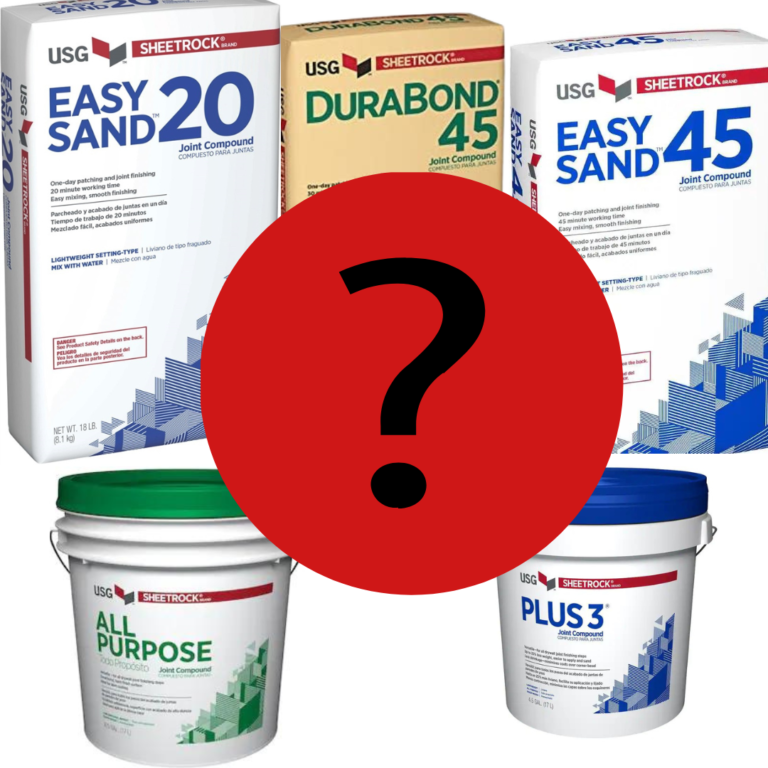
All-Purpose (Green Lid)First Coat: Covering large rooms or heavy texture.Contains the most binders/glue for a superior bond.Heavier to pull and harder to sand than lightweight.Check Price
Lightweight Plus 3 (Blue Lid)Final Coat: Achieving a smooth, pro-level finish.Easiest to skim with; sands like butter for a perfect finish.Softer bond than green lid; dents easier if used for deep fills.Check Price

My Recommendation: Grab a box of USG Sheetrock Plus 3 (Lightweight). It thins down beautifully and sands like butter.

2. The Great Debate: Skimming Blades vs. Taping Knives

I’ve used both for years. I don’t look at them as competing tools—they solve different problems.

When to Use a Taping Knife (10″-12″):

  • Structure: Taping knives are for building structure. If your wall is wavy or joints are humped, a rigid knife helps you fill the valleys.
  • Corners & Tight Spots: You have more control.

When to Use a Skimming Blade (14″-32″):

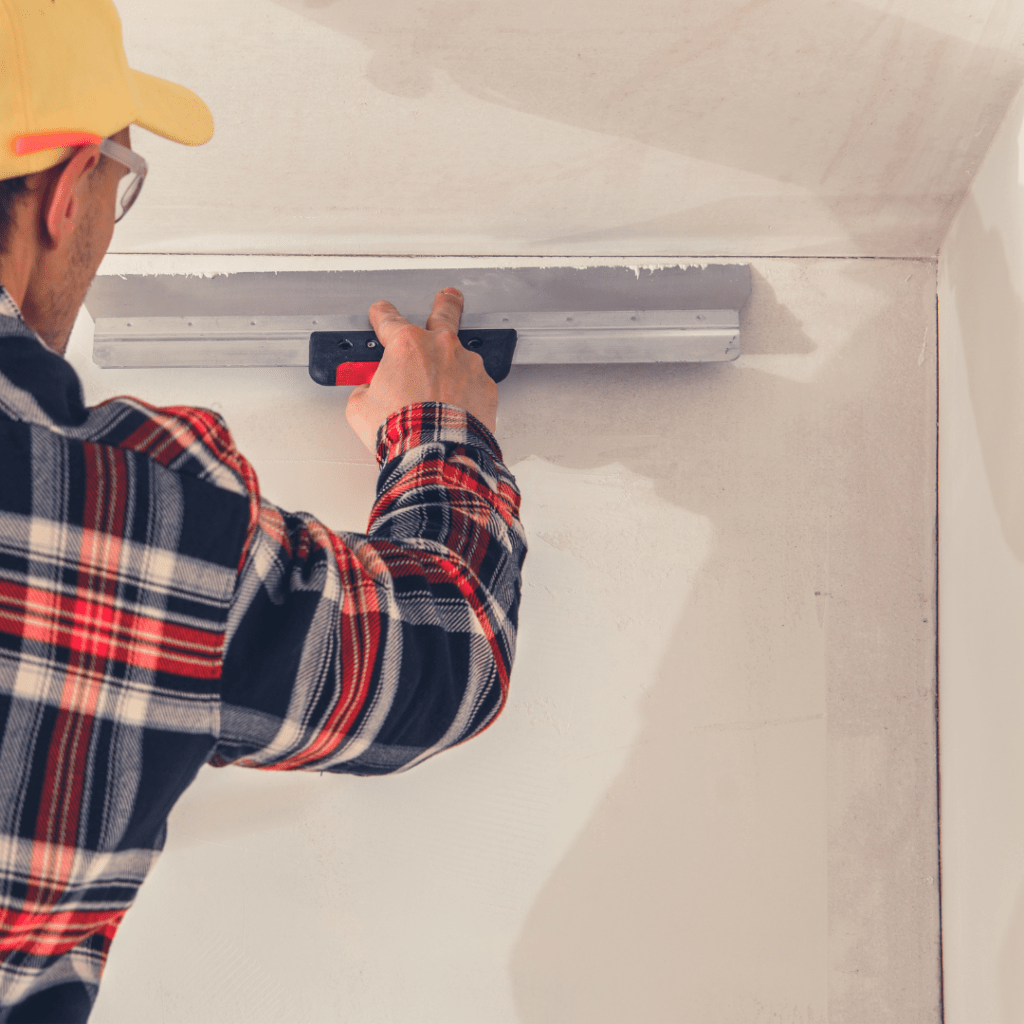
  • Finishing: Blades are flexible. They are designed to smooth and flatten, not to build.
  • Speed: On large walls or ceilings, a 24″ blade covers massive ground and leaves fewer lap lines (ridges) than a 12″ knife.
  • Ergonomics: You use two hands, reducing wrist fatigue.

The Verdict: Use a 6″ or 10″ knife to load the mud or fix heavy damage. Use a 24″ Skimming Blade to wipe it tight and smooth.

3. The Top 5 Skimming Blades: Pro vs. Budget Performance

The “Pro” Tier (Built for Speed & Perfection)

  • Level5 24″ Skimming Blade (Best Overall): This is the industry gold standard. Its precision-engineered 0.3mm stainless steel has just enough flex to glide over mud without “chattering”. If you are doing a whole house, this is the one that pays for itself in labor savings.
  • DeWalt 24″ Skimming Blade (Most Durable): A powerhouse for daily use, featuring a highly ergonomic grip and heavy-duty aluminum housing. It’s a top choice for pros who already use the DeWalt ecosystem of handles and adapters.
  • Vevor 24″ Skimming Blade (Best Entry-Level Pro): A surprising contender for those who want an aluminum housing and a professional feel at a lower price point. It’s slightly stiffer, making it great for “moving” heavier mud on the first coat.

The “Budget” Tier (Best for One-Off DIY Projects)

  • Suokoun 24″ Skimming Blade (Best Value): If you are just skimming one room to hide old texture, this is your best bet. While it lacks the replaceable blade system of premium brands, it gets the job done for nearly 50% less.
  • DEKEones 5-Piece Skimming Blade Set (The All-in-One Kit): The ultimate solution for DIYers who don’t want to buy five separate tools. This set typically includes multiple blade sizes, a carrying case, and an extension pole.

DeWalt 24″ Skimming Blade

Built like a tank. Features a high-grade aluminum housing and comfortable grip for daily professional abuse.

  • High-impact composite end caps
  • Excellent rigidity for heavy mud
  • Compatible with DeWalt handles
View on Amazon

Vevor 24″ Aluminum Blade

Pro feel at a DIY price. Great for those who want an aluminum body without the premium brand cost.

  • Tough aluminum back profile
  • Consistent 0.5mm steel thickness
  • Surprising durability for the price
View on Amazon
Best Budget Value

Suokoun 24″ Skimming Blade

Ideal for one-off projects or single-room renovations. Nearly 50% cheaper than premium brands.

  • Effective for smoothing old texture
  • Lightweight and easy to handle
  • Unbeatable price point
View on Amazon

DEKEones 5-Piece Complete Set

The “All-in-One” DIY solution. Includes multiple blade sizes, an extension pole, and a hardshell case.

  • Everything needed for walls & ceilings
  • Includes extension pole ($40 value)
  • Storage case keeps edges sharp
View on Amazon

The Verdict: If you are doing a ceiling, invest in the pro blades. The weight and lack of flex in budget tools can cause shoulder fatigue and “lapping” lines. Grab the 24″ Level 5 Aluminum Blade and an extension handle to save yourself hours of sanding.

Part 3: How to Skim Coat Drywall Like a Pro (8 Steps)

Follow this process, and you will get results that look like they were done by a 20-year veteran.

Step 1: Prep the Surface

  • Scrape: Use a 6″ taping knife to knock off any high spots, paint drips, or loose drywall paper.
  • Protect: Cover floors with rosin paper or drop cloths. This is messy.

Step 2: Seal the Damage (Critical)

If you have torn drywall paper (brown paper showing), you must seal it.

  • Apply: Zinsser Gardz or an oil-based primer.
  • Why? If you skip this, the paper will bubble when the wet mud hits it.

Step 3: Mix Your Compound

  • Consistency is Key: Box mud is too thick. You want the consistency of thick yogurt or mayonnaise.
  • Mix: Add small amounts of water and mix with a paddle drill mixer until it’s creamy and lump-free. If it falls off your knife instantly, it’s too thin. If you have to shake the knife to get it off, it’s too thick.

The “Dish Soap” Idea
If you were born in the 90s or later, you’ve probably seen a “life hack” video of someone squirting Dawn dish soap into their mud. The Truth: Old-school finishers swear it breaks surface tension to reduce pockmarks. These are the same guys who drink lukewarm gas station coffee like it’s water and haven’t cleaned the passenger seat of their truck since 2004—they have secrets, but they also have some questionable habits. The Reality: Modern compounds like Plus 3 already have plenty of surfactants. While a tiny drop of clear soap won’t hurt, it won’t do anything. Don’t go turning your bucket into a bubble bath, it can affect bonding/paint adhesion if you go crazy with it. Stick to proper thinning with water for the best results.

Step 4: Apply the Mud (The Roll-On Method)

You can use a hawk and trowel, but the Paint Roller Method is faster for beginners and pros alike. Investing in a compound roller will increase efficiency slightly, as they hold more mud than paint rollers.

  • Use a heavy-nap paint roller (1/2″ or 3/4″ nap).
  • Dip it into the bucket of thinned mud.
  • Roll it onto the wall in a 4ft x 4ft section. Get a nice, even layer on the wall.

Step 5: The Wipe Down

  • Tool: Grab your skimming blade (or 12″ knife).
  • Action: Start at a bottom corner and pull up or across.
  • Pressure: Apply moderate pressure on the leading edge. Your goal is to smooth the mud out, not scrape it all off. You want a thin film (approx 1/16″ to 1/8″) remaining.
  • Clean: Wipe your blade clean after every pass. Dried crud on the blade will drag lines in your wet wall.

Step 6: Let It Dry

  • Don’t touch it while it’s drying. It will look gray when wet and turn white when dry. This usually takes 12-24 hours depending on humidity.

Step 7: The Second Coat (Cross-Hatching)

  • One coat is rarely enough for a perfect finish.
  • Cross-Hatch: If you pulled the mud vertically (up/down) on the first coat, pull it horizontally (left/right) on the second coat. This fills in the hollows and ridges from the first pass, creating a dead-flat surface.

Step 8: Sanding (or The “No-Sanding” Trick)

  • Traditional: Use a pole sander with 120-grit or 150-grit paper. Sand lightly. You are just knocking down ridges, not removing the coat.
  • Dust-Free Option: If you did a really clean job, you can “wet sand” with a damp sponge. Rub the sponge in circles to dissolve the high spots. This creates zero dust but requires a very smooth application.
  • The Pro Way (Dust Collection): If you have a lot of square footage, a power drywall sander
    is the only way to go. Using drywall sanders with dust collection keeps the mess contained and saves your shoulders from hours of manual labor.

Part 4: Advanced Troubleshooting & FAQ

1. “Do I really need to prime the wall before I start skimming?”

Many DIYers want to skip this step to save time, especially when working over old paint or bare drywall patches.

  • The common advice: Most guides give a generic “yes” just to play it safe and ensure the compound sticks.
  • The Expert Reality: I’ve learned the hard way that “it depends.” If you are skimming over plaster, painted plaster, or any paint with a sheen (like eggshell, satin, or semi-gloss), you absolutely must prime first. If you don’t, the mud won’t bond correctly and you’ll fight bubbles the whole time. However, if you’re going over brand new drywall specifically to achieve a Level 5 finish, you can skip the initial prime. In that case, you only need to prime after you’ve finished your skim coat and final sanding.

2. “Why does my mud have thousands of tiny pinholes (pockmarks) after I pull the blade?”

This is probably the #1 frustration for beginners, and it almost always happens on the first coat over painted surfaces.

  • The common advice: Most people will tell you it’s just air escaping the old texture or that you mixed your mud too fast.
  • The Expert Reality: In my experience, it’s usually a combination of application and prep. Here is my pro-level checklist to kill the bubbles:
    1. The “Scrape and Re-Pull” Trick: Apply the mud to a section, wait a few moments, and then scrape it all off immediately. Now, go back and coat it again. This “pre-fills” the air pockets and usually eliminates the problem on the spot.
    2. Surface Prep: If you are going over plaster or paint, and the trick above doesn’t work, you absolutely must prime the area first to seal the surface.
    3. Water is Mandatory: Even if the bucket says “pre-mixed and ready,” it’s not. Compound settles during shipment; you must add water and re-mix it to a creamy consistency.
    4. Use the Right Gear: Stop using small paint whips. I use a large, professional-grade mud mixer for a 4.5-gallon bucket to ensure it’s actually smooth and air-free.

3. “Can I just use one thick coat instead of three thin ones?”

Homeowners are always looking for a shortcut to avoid multiple days of drying.

  • The common advice: Pros warn that thick coats will almost certainly crack like a dry lakebed (cross-cracking).
  • The Expert Reality: I’m in total agreement with the pros on this one. One thick coat is far more likely to crack during the drying process. I learned this the hard way in my early days when I tried to speed up a job by applying a heavy coat and hitting it with a blow dryer. The surface dried and shrunk instantly while the mud underneath was still wet, causing the whole finish to split. Drywall finishing is 90% patience—stick to multiple thin coats if you want a professional result.

4. “How much water do I actually add to the bucket?”

The standard instruction is “mayonnaise consistency,” but for someone who doesn’t spend their day in the kitchen, that’s pretty vague.

  • The common advice: Most tutorials tell you to add water in “small splashes” and use a drill mixer until it looks creamy.
  • The Expert Reality: Forget the measuring cups. When I open a fresh 4.5-gallon bucket of all-purpose compound, I simply add water until it reaches the very top rim of the bucket. I then push my mud mixer down and move it around to let the water follow the shaft deep into the mud. It isn’t a precise measurement, but it’s the perfect “on the fly” tip that gets you the right consistency every single time.

5. “What do I do about the corners? The blade doesn’t fit!”

Wide skimming blades are a game-changer for big walls, but they can quickly become a nightmare when you hit an inside corner or a tight door frame.

The Expert Reality: I love my skimming blades, but they are only the right tool if they actually have room to move. On almost all corners, I ditch the big blade and switch to a standard taping knife. I usually reach for a 4″ to 6″ knife to get the control I need, but if I’m in a really tight spot, I’ll even drop down to a small putty knife to ensure the mud is smooth and tight in the corner.

The common advice: Most guides suggest simply switching to a smaller taping knife for the edges and “cutting in” your corners before you roll the main wall.


Final Thoughts

Skim coating is 10% tools and 90% technique. Don’t be discouraged if your first pass looks messy. That’s what the second coat and sanding are for. By using the right compound (Lightweight), the right tool (a wide skimming blade), and the right prep (sealing torn paper), you are already ahead of half the “pros” out there.

Leave a Comment

The maximum upload file size: 50 MB. You can upload: image. Links to YouTube, Facebook, Twitter and other services inserted in the comment text will be automatically embedded. Drop files here